

Composite vs UPVC Doors: Which Is Better for Your Home?
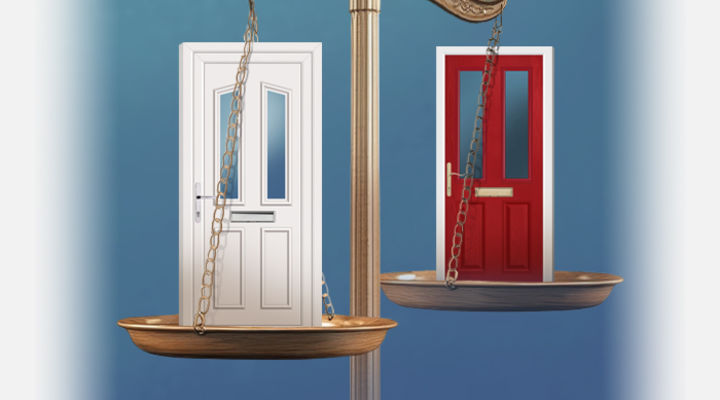
In a market with greater options than before, UK homeowners are wondering which door is the best choice, not only for looks, but also for performance. Composite and UPVC are undoubtedly mainstays in the modern age, so it’s natural that customers want to know the difference between these two materials, and even which one is the best for their needs.
In this blog, we’ll show you what composite and UPVC doors have to offer in terms of performance, what makes them different, and the advantages of each over the other. By the end, you will know with confidence which of these doors is the best choice for you - and for your home.

Composite vs UPVC doors – which is which?
- A composite door is made from a mixture, or “composite”, of materials, including a GRP skin with grained surface, and a core of timber or dense foam.
- A UPVC door is made from unplasticised polyvinyl chloride, and the layers sandwiched together. It has a smooth surface or light grained texture.
Are composite doors worth it?
- Composites are comparable in cost to timber doors, with a Supply Only solid composite door costing at least £600 (excluding fitting and extras), and glazed doors up to £1300. Rock Doors, a specific range of high-security composites, cost even more.
- They offer superior insulation and weather resistance to wooden doors, thanks to multi-layered construction, and a rainproof surface preventing moisture absorption, which can cause decay and deformation in unprotected timber doors.
- They’re secure as standard, including a tough GRP skin, reinforced frame, and a multi-point locking system to remove vulnerabilities along the locking side of the doorway.
- There are large ranges of traditional style composite doors and modern style composite doors, as well as finishes, and they require little in the way of maintenance.
Are UPVC doors worth it?
- UPVCs are generally cheaper than composite and heavyweight timber doors, with a Supply Only solid UPVC door costing £550 (excluding fitting and extras), and up to £800 for glazed styles. However, lightweight timber doors can cost less.
- They are designed to offer superior insulation than timber doors, thanks to multi-layered construction, and are also weather resistant, deflecting rain to prevent moisture absorption.
- They offer security in the form of a steel reinforced frame and multi-point locking system, the latter eliminating the vulnerabilities of a single-point lock system.
- Like composite, they are much easier to maintain than timber doors, and there are a variety of traditional style UPVC doors and modern style UPVC doors. However, their colour options are limited compared to composite.
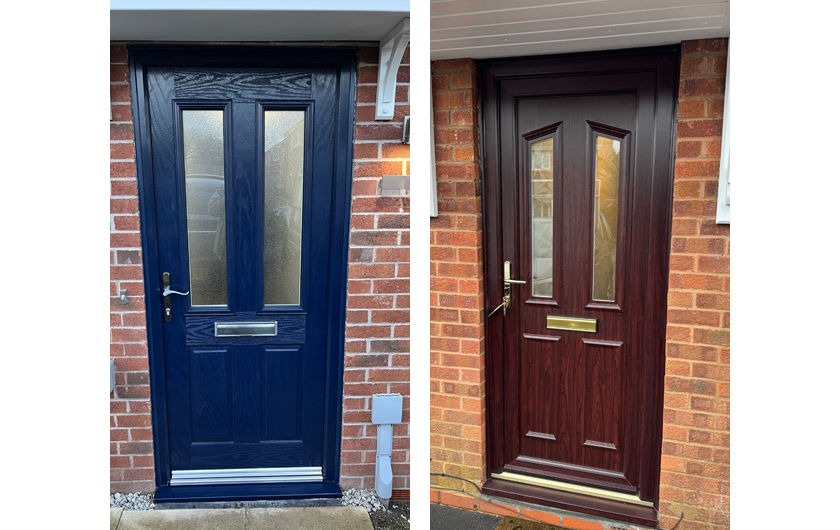
What is the difference between composite and UPVC doors?
- Composite is heavyweight, while UPVC is lighter.
- Composite doors have a look closer to natural wood, while UPVC has a sleeker appearance.
- A composite door will generally cost more than a UPVC one of similar style.
- Composite doors are available in significantly more colour ranges than UPVC.
- The average composite lifespan is 30 years, while a UPVC door lifespan averages at 20 years.
Which door is the best – Composite or UPVC?
- For budget – UPVC door is more budget-friendly than composite, costing less and offering some of the same benefits, such as insulation, security and low maintenance requirements.
- For security - While composite and UPVC both offer good security features, composite’s greater sturdiness makes it a better choice. Rock Doors offer even greater security than standard composites, with the inclusion of S-Glaze technology integrating glass into the slab, removing the risk of tampering.
- For energy efficiency – Composite and UPVC both rate equally, as they both include the features of multi-layered construction (helping to reduce heat loss), warm edge spacer bars within the glass (deflecting heat back indoors), and durable weatherseals (to keep out draught).
- For maintenance – Composite and UPVC are equally easy to clean, are UV-stable and do not require repainting.
- For style – Whether you’re looking for a modern or traditional style, composite and UPVC both offer a wide choice. However, composite has a look closer to wood, making it more favourable as a direct replacement to a wooden door, while UPVC’s sleek appearance makes it a good choice for modern homes.
- For colour options – Composite offers a significantly larger choice of colours than UPVC does. Conversely, both are available in a selection of woodgrain finishes to mimic the look of wood.
Summary of Composite vs UPVC doors
|
|
Composite |
UPVC |
||
|
|
|
|
||
|
Average cost (excluding fitting & extras) |
Standard |
£600 to £1300 |
£550 to £800 |
|
|
Rock Door |
£1600 to £1900 |
|||
|
Range |
Styles |
Traditional to modern |
Styles |
Traditional to modern |
|
Colours |
Large |
Colours |
Small |
|
|
Energy efficiency |
Good |
Good |
||
|
Weather resistance |
Good |
Good |
||
|
Security |
Standard |
Good |
Good |
|
|
Rock Door |
High |
|||
|
Maintenance |
Low |
Low |
||
|
Average lifespan |
30 years |
20 years |
||
Time to transform your home?
It’s easy to get started. Here are ways how:
- Call us free – Contact our door experts on 0800 910 1122 to discuss your requirements.
- Message us – Either via the blue tab on the right or via our Contact Us page.
- Order online – View hundreds of composite doors and UPVC doors, and customise your chosen style. Available Fully Fitted or Supply Only.
or