

02 January 2026
How Energy Efficient Are Modern Doors? A Homeowner’s Guide
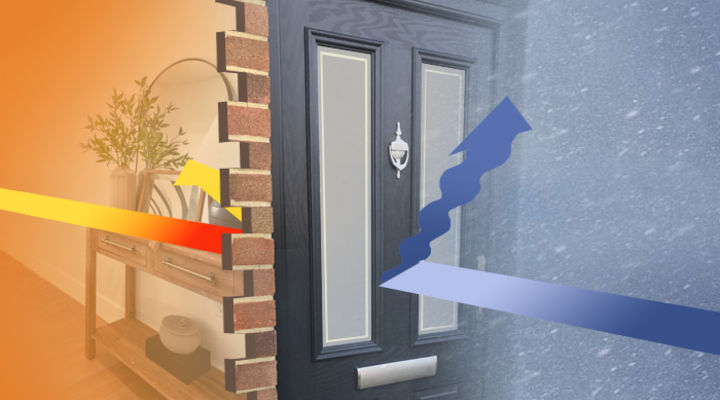
As with security, energy efficiency has become a concern with UK homeowners when it comes to their doors. But, just how energy efficient are doors nowadays, and why does it really matter? In this blog, we’ll take a look at what makes energy efficiency so important to homeowners, ways in which you can reduce heat loss in your home, and what to look for in an energy saving door.
Why is energy efficiency important?
- Wasted energy equals wasted money, so proper insulation can help you save money. In 2022, there was a 467% rise in searches from the previous year on “how to reduce energy bills”, showing that people are more conscious of energy efficiency than before, at least financially.
- Heat loss is a common issue with UK homes – and up to 15% of heat loss occurs through doors.
- Energy efficient doors and windows leave a smaller carbon footprint than less efficient ones, making them better for the environment.
What are the best insulated doors
- The top energy saving doors UK homeowners are going with are composite doors.
- The thermal efficiency of UPVC doors is comparable to that of composite doors. While they are lightweight, they still offer superior insulation to standard wooden exterior doors.
How to reduce heat loss through doors
- Make sure that your door lines up correctly with its frame. Some doors are fitted with adjustable hinges, which can be adjusted to correct ‘dropping’.
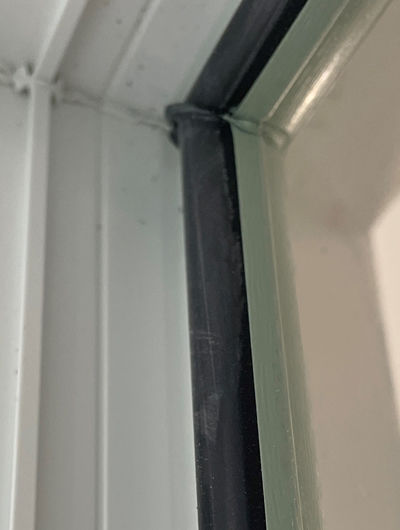
- Check that gasket weatherseals are not damaged, as these are crucial to forming an airtight seal against draught.
- Ensure there are no gaps between the frame and the brickwork. Good fitting should include proper sealing to prevent potential draught.
- If your current door does not meet these criteria, you’ll have to consider an energy efficient door and an expert fitting service. While the extra surface costs of a new door and fitting service may feel off-putting to some, the right door and expert installation will certainly save money in the long run.
What makes composite and UPVC doors energy efficient?
- Multi-layered construction – A single layer allows heat to escape from indoors too easily, whereas multiple layers break up this escape path. A multi-layered door thus helps to retain more heat inside the home. It is also effective for the same reason in preventing the inward passage of draught.
- High-performance weatherseals – These flexible strips, known as gaskets, around the edges of the door form a seal when closed to block out external draught, leaving no gaps in-between.
- Double and triple glazing – As with the multi-layered construction in composite and UPVC doors, multi-layered glass units can also help to reduce heat loss by restricting the passage of heat outwards and draught inwards.
- Warm-edge tech spacer bars – Standard aluminium spacers used within glass units do not offer adequately insulation, whereas the warm-edge tech spacer bars used within our composite and UPVC doors are specifically designed to deflect heat back inwards.
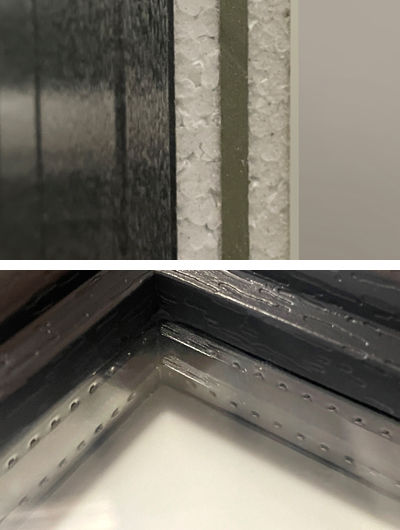
Top: An example of a muti-layered UPVC door panel; Bottom: Warm edge tech spacer bar within a glass unit
Energy efficiency – not just for modern homes
- Composite and UPVC doors come in various styles to suit period homes, and with these modern energy-saving features can contribute to making even older homes more thermally efficient.
- Of course, there are also several modern composite doors and UPVC doors to choose from, so there are styles for everybody.
Ready to warm your home?
Great! We’re here to help. To order your new composite or UPVC door, you can:
- Call us free – on 0800 910 1122 to speak to our door experts, who’ll be happy to answer your questions.
- Contact us online – via the blue tab on the right, or on our Contact Us page.
- Viewing our styles online – look at hundreds of composite and UPVC doors, front and back, and choose to have yours Fully Fitted or Supply Only.
or