

Door thresholds
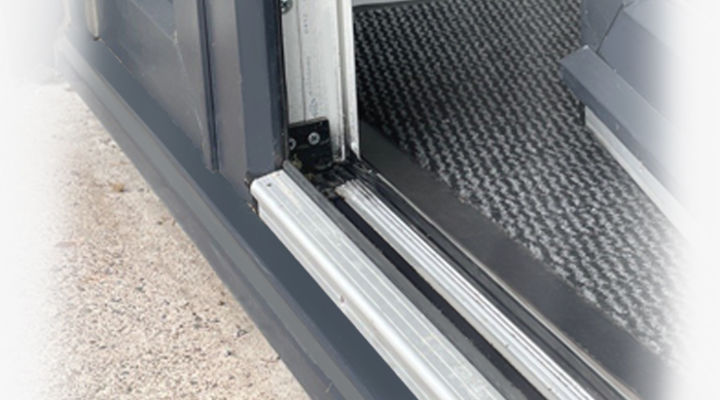
While every door has one, we don’t always think about them. They may seem beneath us, but thresholds are actually vital to everyday use. In this blog, we'll look at the history of thresholds, why they're important, what types are available and what you should consider when choosing one for your doorway.
What is a "threshold"?
Simply put, a threshold is the crossing point between two sides of a door, but why is it called that?
Its original use was related to "threshing" crops
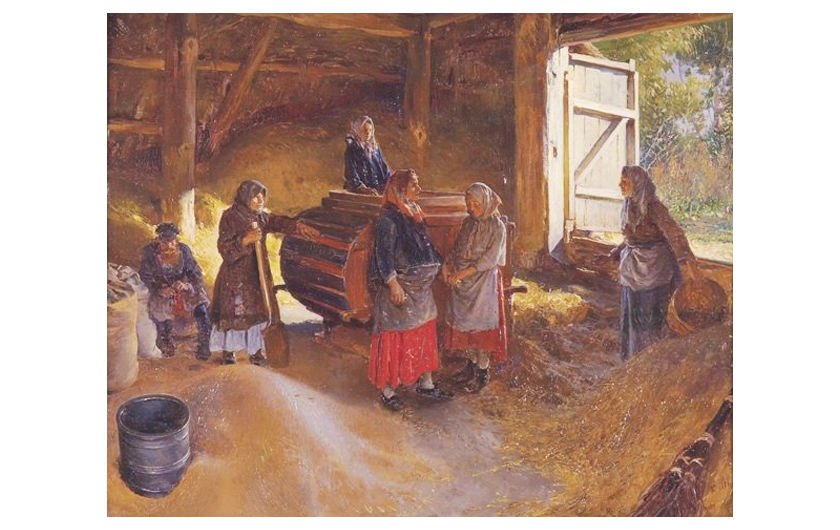
- The term "threshing" (also known as "thrashing") comes from the technique of seperating grains from stocks of harvested crops. The crops would be gathered into an enclosed area, typically within a barn, and either stomped underfoot or flailed.
- The term "threshold" originally referred to the floor on which threshing took place, but later came to refer to the boards that were placed against doorways to keep crops contained.
The dividing threshold between inside and outside is centuries old
- The perception of bounderies across doorways is not new, and this held relevance in different cultures. The ancient Romans believed that crossing the threshold with the left foot was unlucky, while the tradition of a newly-wed husband carrying the wife over the threshold into their home was to keep her away from evil spirits in waiting.
- In modern times, threshold traditions include it being bad luck to kiss or shake hands over a threshold in Poland, Russia or Ukraine, while in Scotland it is considered bad luck for the first foot to enter a home after Hogmanay without a gift.
The threshold today
- Nowadays, the threshold has come to be known as the strip across the bottom of the door which keeps oput draught and dirt, similarly to how the original threshold would hold threshed crops.
Why is a threshold important?
- Weather resistance - A good threshold is essential to keeping out draught and rain.
- It can keep out pests - Being offset from ground level, the threshold makes it difficult for pests (insects, rodents) to wander into your home.
- Thermal efficiency - A good threshold can minimise heat loss, helping you to save on energy usage and costs.
- It looks appealing - Without a threshold, the door would look unfinished.
Types of thresholds
We offer three types of threshold for our external composite doors and UPVC doors.
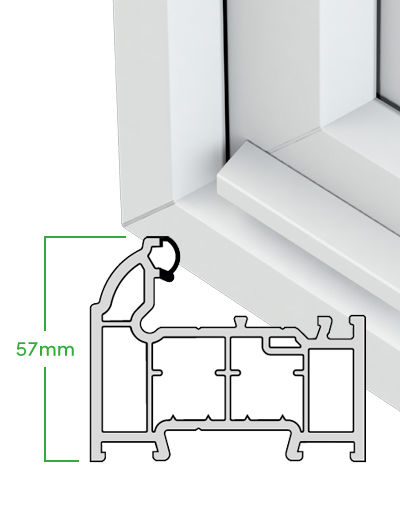
Standard UPVC threshold
Height: 57mm
The default size of threshold. Matches the thickness of the frame, giving the doorway a uniform look all-round.
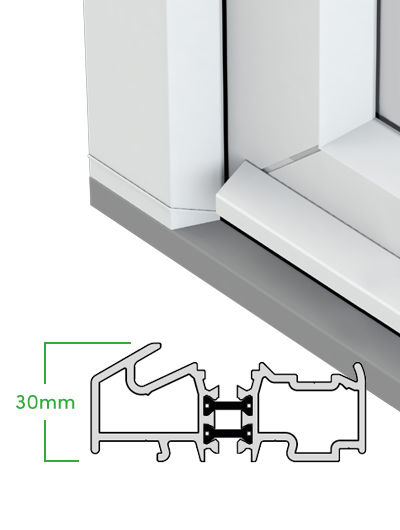
Low aluminium threshold
Height: 30mm
Easier to step over. It has the advantage of being thermally broken, which helps to minimise heat loss.
Part-M threshold
Height: 15mm
The lowest height option. It is angled for easy wheelchair access, and as the name suggests is Part-M compliant.
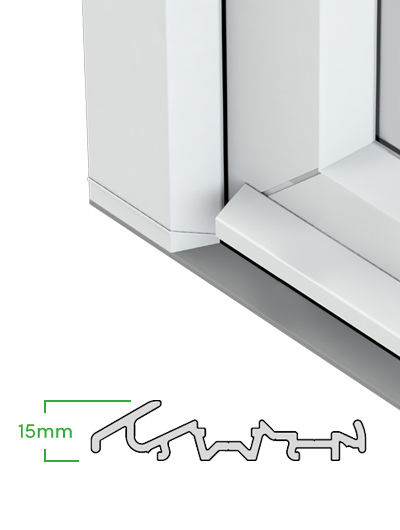
NOTE that the inclusion of a cill will add 30mm to the height of the threshold
Things to consider when choosing a threshold for your doorway
Note that if you've chosen a Fully Fitted door, your fitter will advise what threshold is necessary; for Supply Only, you will need to determine the choice of threshold yourself.
Who is using the doorway?
- For stepping over by foot, a standard UPVC or low ali thresh should be sufficient.
- For a wheelchair user, a Part-M compliant threshold would be required.
Doorway height
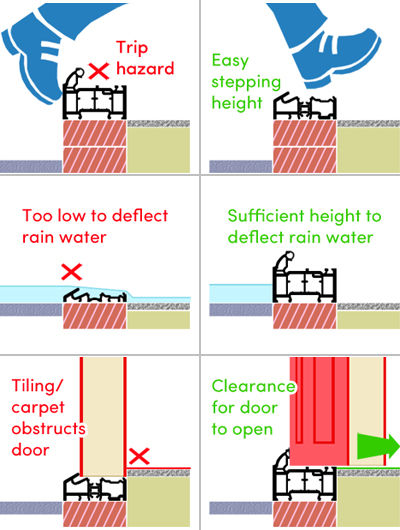
- The height should be enough that you can pass through the door comfortably. If the threshold is too high, it poses a tripping hazard; too low and it may not offer sufficient protection against rain water and draught.
Doorway clearance
The type of threshold needed will also depend on the clearance of the door. Two factors can affect door clearance are:
- If the internal floor height is different to the external fllor height.
- If the internal floor has thick tiles or carpeting that could impact how the door opens.
I need a new door - and threshold!
Ordering your new composite or UPVC door is easy! You can:
- Message us - Either by clicking on the blue tab on the right, or visiting our Contact Us page.
- Call us - Discuss your requirements with our friendly door experts. Give them a call free on 0800 910 1122.
- Buy online - You can view hundreds of doors online and choose your favourite. With a Fully Fitted door, one of our experienced fitters will measure up and determine what threshold you need. For Supply Only customers, you can select your threshold from the options as you place your order.
or