

08 May 2025
Door Energy Efficiency
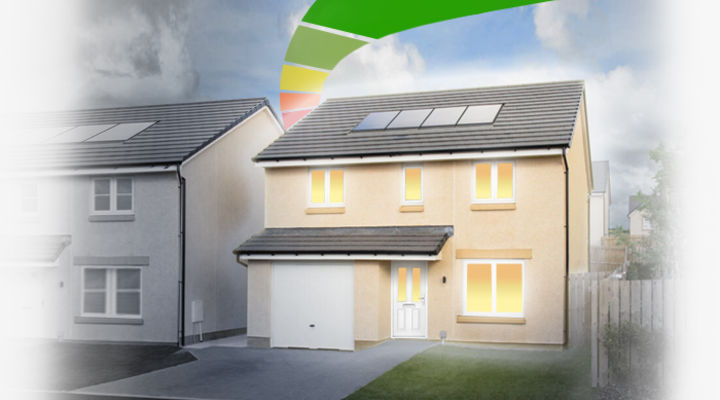
It’s important to be clued up on energy efficiency, as how you heat your home can go hand-in-hand with how much money you burn (figuratively, we hope). One area to consider is the doorway, as this is one of the major key points that affects just how energy efficient, and warm, your home is. In this blog, we look at the benefits of energy efficiency, and what to look for in picking the right door for the job.

You shouldn't have to 'burn' money to heat your home
Why are energy efficient doors important?
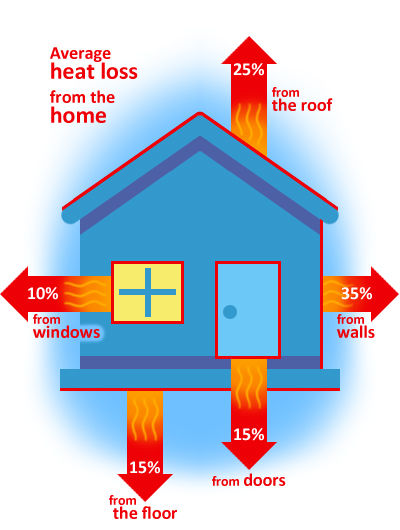
- They reduce heat loss - On average, UK homes lose 15% of heat through doors. Energy efficient doors are designed to keep more heat indoors and the cold out.
- They help to cut down costs - A survey in 2022 showed a sharp 467% rise in web searches for "how to reduce energy bills" compared to the previous year. Using energy to heat the home costs money, so insulation is effective not only in cutting down energy use but also on spending.
- They help the environment - By using energy efficient doors, it takes less energy to heat your home, and thus reduces your carbon footprint.
What is the most energy-efficient type of door?
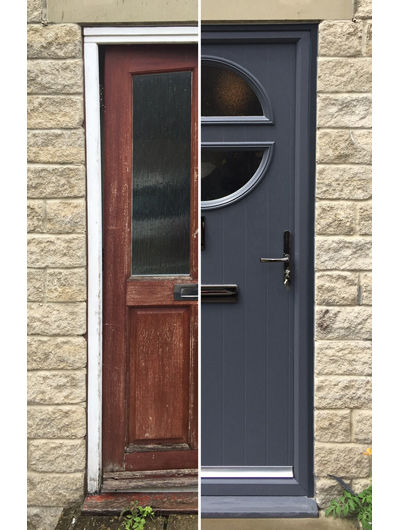
- Composite, UPVC and wood doors are good – Wood is a natural insulator and effective in containing heat. However, composite and UPVC doors are multi-layered, which proves more effective than a single-layered or hollow wooden door, as heat does not escape so easily.
- Steel and aluminium not so much – These materials offer poor insulation and require special measures to make them energy efficient, whereas composite and UPVC are energy efficient as standard.
How do composite and UPVC doors compare with wood?
- Composite and UPVC are more weather resistant – This affects durability, as a door that’s vulnerable to the elements can lose its integrity, where such problems as changing temperature and moisture absorption can cause the door to warp and fail to seal correctly. Composite and UPVC come as standard with a weather-resistant surface to deflect moisture, whereas not all wooden doors have this same protection without treatment.
- Composite and UPVC are multi-layered – Multiple layers make it harder for heat to escape, whereas single-layered and hollow wooden doors make it too easy.
- Composite and UPVC offer more value for money – As a result of their default weather resistance and better insulation, composite and UPVC are more cost-effective in the long run, not requiring special treatment or upkeep that might be so for wooden doors. In fact, having a composite installed could save you up to 30% on energy costs.
What makes your composite and UPVC doors energy efficient?
- Multi-layered construction – The use of multiple layers gives heat a harder task of escaping from your home. What’s more, our UPVC doors consist of a heat reflective outer surface and high-density core, while our composites have a glass-reinforced plastic (GRP) skin and polyurethane (PU) core for the same purpose.
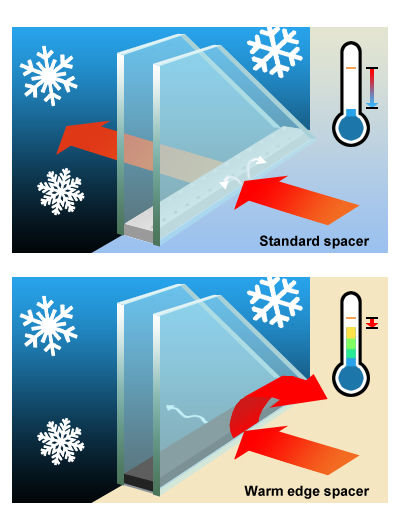
- Double (and triple) glazing with warm edge spacers – Double and triple glazing naturally offer superior insulation than single glazed doors and windows. Not only that, our glass uses warm edge tech spacer bars made from heat-conductive materials to deflect heat – and this applies to toplights and side panels as well!
- Weatherseal gaskets – High-performance gaskets surround the edges of each door, keeping the old outside where it belongs.
Ready to save energy and money?
Get ready to order your new thermally efficient door. It’s easy:
- You can call us free – Get in touch with our door experts on 0800 910 1122 free of charge.
- You can message us – By using the blue tab on the right, or visiting our Contact Us page.
- or find your door online – Browse hundreds of composite and UPVC doors right here, and choose to have it Fully Fitted or Supply Only.
or