

03 December 2025
The Ultimate Guide to Choosing the Right Front Door for Your Home
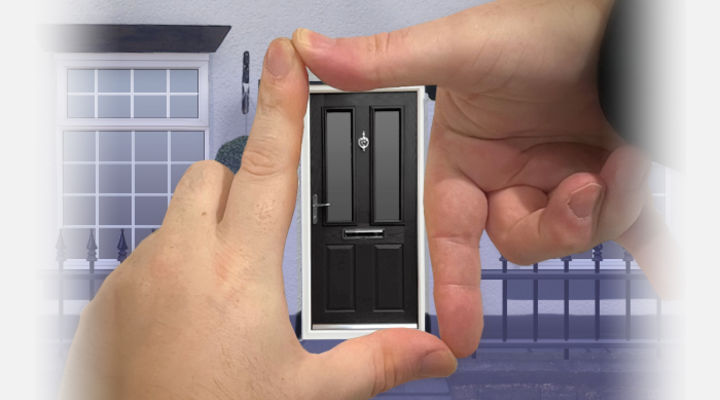
The time has come to get a new front door. There are things to consider, from colour to style, and even how effective the door will be in the long run. In this blog, we take a look at two of the most prominent door types, which ones are best suited for security and insulation, and what to consider when choosing a door for a specific type of home.
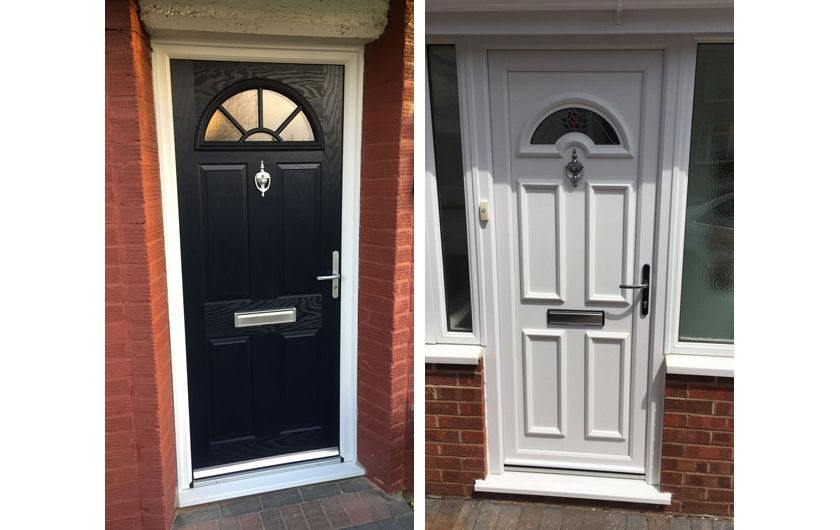
Composite vs UPVC front doors
- Composite offers the same look as a wooden door, with its GRP skin emulating the grained and knotted appearance of timber. It is also a more robust option than UPVC, but also more expensive. There are many styles available, as well as colour options.
- UPVC is a budget-friendly choice, more lightweight than composite and with a smoother, less wood-like appearance. It comes in a variety of styles, but with a limited selection of finishes.
- Both include various options for hardware, toplights and side panels, minimising compromise when deciding which door type to go with.
Most secure front doors
- For robustness – Composite doors are more robust than lightweight UPVCs, better able to resist force. However, both composite and UPVC door types include toughened safety glass resistant to impact, as well as steel reinforcement within the frames.
- For locked doors – Our composite and UPVC doors include multi-point locking systems, which reduce the vulnerabilities of a single-point lock. We use Secured By Design locking systems, with “SBD” a UK-wide, police-approved initiative to reduce crime.
- For overall security – Rock Doors offer the greatest security. These are a renowned brand of composite door built specifically to tackle burglary. As well as a multi-point locking system and frame reinforcement, which are present in our standard composites, Rock Doors also use S-Glaze technology to seal glass within door panels for added strength and tamper resistance.
- A smart lock, such as the Ultion Nuki smart handle, can add an extra layer of security. The Nuki as an example works with your smart phone to provide auto-locking and unlocking via perimeter detection, as well as methods of entry such as touchpad and fingerprint access.
Energy efficient front doors
- Both composite and UPVC offer superior energy efficiency to wooden doors. Composite and UPVC are multi-layered, which helps to reduce heat loss from indoors, while single-layered doors make it too easy for heat to escape, and thus waste energy costs.
- Warm edge tech spacer bars within the double and triple glass units for our composite and UPVC doors, not to mention in toplights and side panels as well, deflect heat back indoors and minimise its escape outdoors compared to standard aluminium spacer bars.
- Composite, UPVC, and even wood, make good insulators, whereas aluminium is a poor material for insulation, and hence aluminium doors without proper thermal breaks aren’t energy efficient.
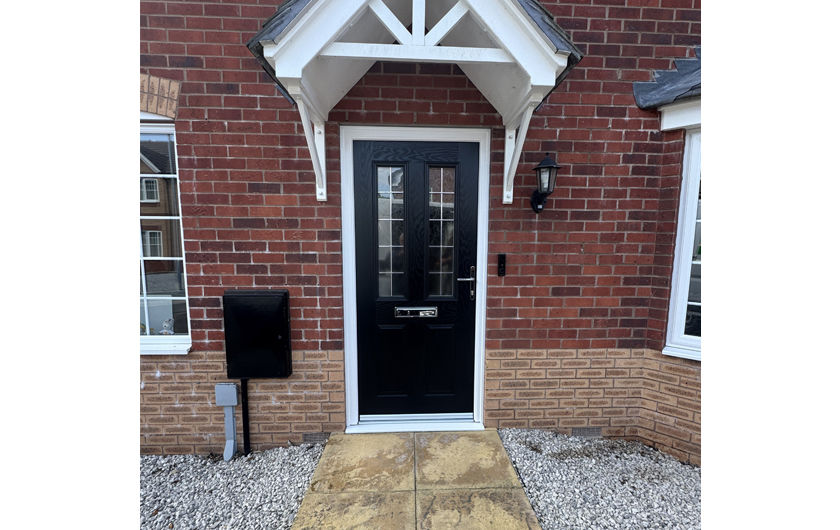
Front door ideas for British homes
No two homes are the same, so let's have a look at ways you can transform yours with the right front door.
It’s important to note:
- First and foremost, the front door is the face of your home – Consider the overall aesthetic of your home (is it modern or traditional?) and a door that will match in design.
- UK homes come in many shapes and sizes – This makes it important to choose a bespoke-sized door for your home to provide a seamless appearance, and one that offers reliable security and insulation.
Door ideas for British home styles:
- Period style doors for period homes – Consider styles that match the era of your home:
- Georgian homes – Colonial designs that are solid or have minimal glass in the top, with an emphasis on symmetry and order overall. Light is generally provided by means of a toplight above the door.
- Victorian homes - Twin vertical glass, or even glass panels with arched or swept tops. More options for glass, including etched designs or the use of lead/came.
- Edwardian homes – A greater focus on glass, including colourful glass panels and even multiple panels. Matching side panels and toplights help to maximise the spacious design of this era.
- Georgian homes – Colonial designs that are solid or have minimal glass in the top, with an emphasis on symmetry and order overall. Light is generally provided by means of a toplight above the door.
- For post-period era homes:
- 1930s homes – A door with a three-quarter measure solid/glass, such as our London composite door or the Portland Rock Door.
- Contemporary homes – Minimalist designs with simpler glass styles and even asymmetrical configurations, from small squares to long full-height glass panels. Bar handles and stainless steel hardware are ideal for emphasising the contemporary look.
- 1930s homes – A door with a three-quarter measure solid/glass, such as our London composite door or the Portland Rock Door.
Colours matter too
- Tried-and-tested colours work for traditional homes – These include heritage colours such as dark green, dark blue, red and black.
- Woodgrains add a more natural feel – These include rosewood and golden oak, resembling standard wooden doors.
- Neutral greys for modern homes – Anthracite and slate grey work perfectly with contemporary door styles to emphasise stark design.
- Black and white are bold – Black helps to bring out contrast, while white creates a sense of newness.
- Soft tones for a calm feel – Pastel finishes like chartwell green, cream and duck egg blue provide more relaxed alternatives to richer colours and tones.
Easy access for your pet
- A catflap or pet door (for dogs) allows your pet to enter and leave independently. Of course, you can set rules for this, either manually or electronically.
- Manual catflaps and pet doors must be locked and unlocked by hand, while microchip catflaps and pet doors have options to grant entry/exit to specific cats or dogs. The latter detects your pet's microchip, so intruding cats/dogs cannot enter, and models such as the DualScan even let you set different entry/exit permissions for different pets.
DIY vs professional installation
- While ordering a Supply Only door for DIY installation is cheaper than a Fully Fitted one, it’s important to consider that you will be responsible for its installation. This includes taking the measurements to ensure that your new door is ordered to correct size, as well as the removal of the old door. While the door will be guaranteed, its installation will not be.
- Professional installation on the surface is more expensive than DIY, but with such a service work is carried out by a skilled tradesperson. This includes a detailed survey for accurate sizes, as well as the removal and disposal of your old door, as well as all mess tidied up after installation. Both the door and installation will be covered by guarantee.
I’m ready to order
Good. You can speak to use before making a choice or view what we have to offer.
- Call us free – Speak to our Door Experts on 0800 910 1122 and discuss your needs with them.
- Send us a message – You can do this on our Contact Us page or quickly via the blue tab on the right.
- View our styles online – Have a browse through hundreds of designs and gain inspiration, as well as customise your door-of-choice before ordering.
or